

With Just 10 Percent of the Reconstruction cost, Iran Can be Properly Safeguarded against Earthquakes.
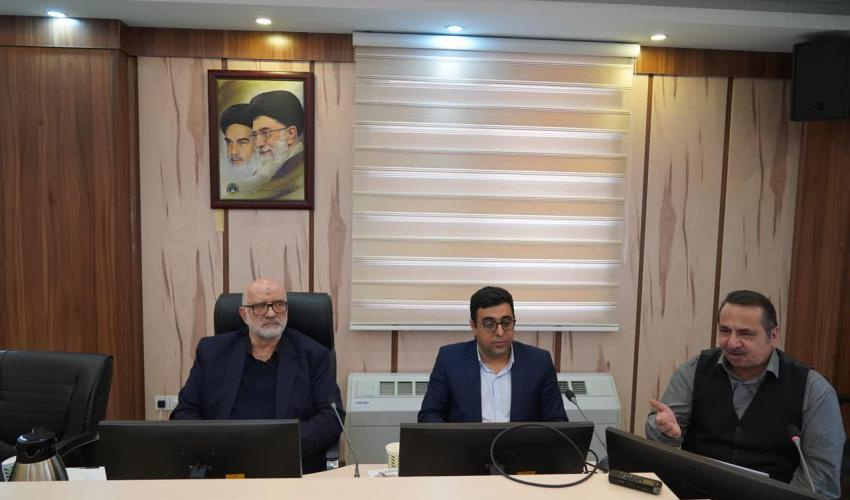
According to the Communications and International Relations Center of the Supreme National Defense University, the third expert session of the “Scientific Meeting on Earthquakes and National Security,” held within the framework of the nationwide conference on “Environmental Hazards and the National Security of the Islamic Republic of Iran,” convened on Wednesday afternoon, December 24, under the chairmanship of Brigadier Hossein Baqeri, with the participation of a number of officials, seismology experts, crisis‑management directors, and university professors at the Supreme National Defense University.
In this session, Brigadier Baqeri emphasized the need to shift the country’s focus from “post‑disaster reconstruction” to “pre‑disaster prevention,” stating that if roughly 10 percent of the funds currently spent on debris removal, reconstruction, compensation for damages, and relief assistance were instead allocated in advance to structural reinforcement, renovation of deteriorated urban fabrics, strengthening of infrastructure, public education, and the development of early‑warning and precursor systems, it would be possible—through a multi‑year program—to fundamentally safeguard the nation’s cities and villages against earthquakes and prevent recurring financial burdens on the national economy.
He described earthquakes, in their essence, as “one of God's blessings and a necessary part of the natural cycle,” contributing to the dynamism of the Earth’s crust and the enrichment of surface and underground resources. However, when combined with unprincipled construction, weak standards, the expansion of deteriorated urban fabrics, and ineffective management, they turn into a serious threat to people’s lives and property. Meanwhile, the experience of other countries shows that by adhering to engineering standards, implementing early‑warning systems, and promoting public education, even major earthquakes can be managed and prevented from turning into a national catastrophe.
Referring to the changing nature of threats and the linkage between environmental hazards and hybrid, cognitive, and technological warfare, he emphasized that the enemy can exploit any infrastructural, managerial, or social vulnerability. Therefore, the smartening of crisis management, the use of big data, online monitoring systems, remote sensing, and precursor indicators is no longer a luxury option but an essential component of national defense and security requirements.
Brigadier Baqeri identified the absence of a unified command structure and the persistence of parallel work among institutions as one of the main bottlenecks in the country’s crisis management. He stated that the multiplicity of decision‑making centers, overlapping missions, and the lack of a clear chain from policymaking to implementation lead to resource waste, public confusion, and reduced effectiveness of actions. In contrast, establishing a unified command structure with transparent and accountable division of labor can significantly enhance speed, order, coordination, and efficiency in managing disasters such as earthquakes and floods.
He considered the current approach to temporary housing for disaster victims in need of fundamental revision, explaining that in practice, temporary accommodation in some cases turns into long‑term stays lacking adequate standards and without a clear connection to a sustainable reconstruction plan. In contrast, the proper model is to focus on short‑term emergency sheltering accompanied by precise planning for safe and resilient permanent housing, so that people can exit their vulnerable situation in the shortest possible time.
He stressed the need—given the country’s extensive hazard‑prone regions—to develop a “National Map for Prioritizing Vulnerable Areas,” a framework that would delineate phased investment pathways for retrofitting and risk reduction based on hazard levels, population density, infrastructure criticality, and each region’s economic role, while enabling the smart allocation of resources to the most critical zones. He also underscored the challenge of flooding, calling for a shift from post‑event relief to watershed‑based management and upstream interventions, and identifying measures such as watershed conservation, vegetation‑cover management, flood‑control structures, aquifer reinforcement, and the redesign of bridges and roads in line with emerging climate scenarios as essential pillars of flood‑risk reduction. Iran’s climatic diversity and its repeated experiences with drought, flooding, dust storms, and climate change make it necessary for research and strategic centers to move beyond purely theoretical reporting and instead provide actionable “what‑to‑do” packages for governmental and non‑governmental institutions.
Another part of his remarks focused on public education, the role of NGOs, and knowledge‑based companies. He described educating citizens across all age groups as a “lifesaving necessity,” emphasizing that successful crisis management is fundamentally people‑centered. NGOs, volunteer groups, and local community networks, he noted, can play a decisive role in public education, early warning, emergency relief, and social recovery. Alongside them, knowledge‑based companies can serve as engines of innovation in the country’s crisis‑management system by developing early‑warning technologies, smart monitoring platforms, lightweight shelter equipment, and novel solutions for structural retrofitting.

Your Comment :