

Warning from the Senior Crisis Management Director about the "Hybrid Threat" in Natural Disasters / The Necessity of Developing an Operational Plan to Address "Simultaneous Crises"
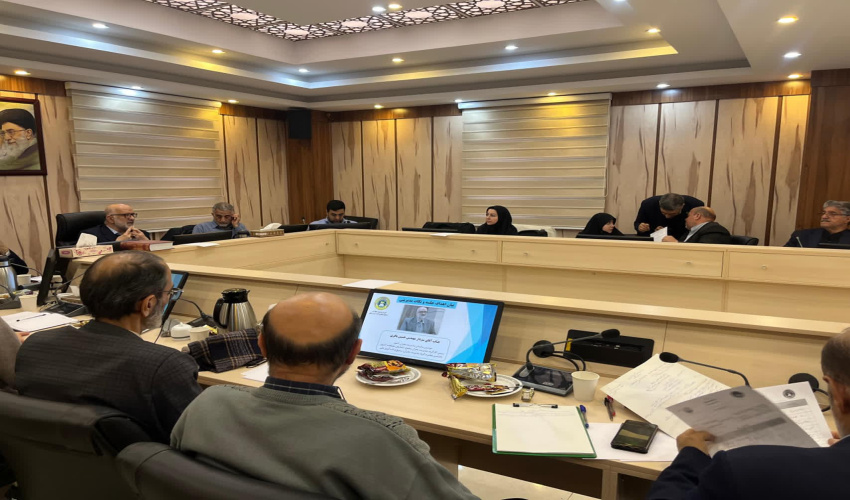
According to the Communications and International Relations Center, a brainstorming session titled "Examining the Combined Consequences of Natural Disasters and Human-Made Incidents" was held under the leadership of Brigadier General Hossein Baqeri. The session was attended by various officials, specialists, crisis management experts, and university professors at the National Defense University.
Engineer Hossein Baqeri, Deputy of the Independent Crisis Management Group, Mobilization of Resources, and National Resilience, referred to the critical responsibilities of this group in the fields of crisis management, resource mobilization, and national resilience. He stated: "Our fundamental question is whether there is any guarantee that, in human-made incidents such as imperialist attacks and internal upheavals, a natural disaster will not also occur? Are we adequately prepared?"
In posing this strategic question, he emphasized the key role of the media in this regard and called for the activation of the "Cultural, Art, and Media Desk." He stated: "The media must raise the issue, organize calls for participation and competitions, and embed these topics in public opinion, educating both the public and officials. Their responses should be assessed through staff-level exercises."
According to this senior official in the field of crisis management, addressing this “strategic question” and formulating an operational plan for “simultaneous natural and security crises” constitute the immediate and essential mission facing the Crisis Management, Resource Mobilization, and National Resilience Task Force.
Subsequently, Dr. Kalantari examined the country’s situation within the framework of full-spectrum hybrid warfare and stated that Iran is currently engaged in nine domains of hybrid warfare, including economic, cultural, media, intelligence, political, and security warfare, among others— a situation that requires swift analysis and response.
It was further noted that the importance of changing Iran’s defense doctrine from a threat-oriented approach to a security-oriented one was emphasized. This change is necessary in order to operate in the best possible manner across various fronts. Additionally, reference was made to the need to shift from a reactive mode to a proactive one, so that the initiative rests with Iran itself. In this regard, the importance of changing the perspective from “intelligence as an annex to operations” to “operations as an annex to intelligence” was highlighted. This change can help Iran avoid always being one step behind the enemy and, instead of merely neutralizing threats, demonstrate its own initiative.
At the conclusion of the meeting, the gathering of artists and figures from the cultural and media sectors declared their firm, clear, and revolutionary stance in a statement read out by Dr. Somayeh Valian, Head of the Culture, Arts, and Media Desk in Crisis Management, as follows:
In the Name of God, the Most Compassionate, the Most Merciful Emphasizing the directives of the wise Leader of the Islamic Revolution, rioters are not parties to dialogue, and any leniency in the face of insecurity and disruption of public order amounts to weakening urban security and paving the way for the realization of the enemy’s objectives. Decisive, lawful, and intelligent action against disruptive elements is a revolutionary necessity and a public demand.
We believe that giving more serious attention to the livelihood concerns of the people is a necessary and undeniable matter.
However, reforming the Iranian-Islamic lifestyle and forgoing consumerism can greatly help overcome economic crises, and this matter requires a national resolve as well as more precise, more transparent, and more effective policymaking in the field of economic culture.
Therefore, it is expected that the government, in cooperation with the representatives of the Islamic Consultative Assembly and with the assistance of the judiciary, by drawing upon all the capacities of the country’s elite and young experts, and while taking into account the unsuccessful experiences of past decades, present a coherent and practical program for articulating an authentic Iranian-Islamic way of life, as well as for supporting the people—especially salaried groups and the underprivileged and vulnerable segments of society.
The enemies of the Islamic Revolution, aware of the role of the Islamic government in advancing the Revolution’s ideals, seek—through false narratives, incitement of chaos, destruction, and psychological warfare—to distort and undermine the effectiveness of the Islamic system at various levels of governance, particularly in urban management, and to weaken the bond between the people and the Islamic authorities. Revolutionary vigilance and a firm demarcation from the seditionists are essential conditions for safeguarding this path.
We are confident that through timely education, cultural development, and effective communication, such crises can be prevented. With sacred national unity, vigilance against enemies, and cultural initiatives, dear Iran will, by the grace of God, emerge from this phase with honor, despite the empty boasts of the Americans.
In conclusion, while expressing our appreciation for the loyal and ever-present people of dear Iran and firmly condemning the recent unrest, we declare that the cultural, artistic, and media professionals—relying on Almighty God, fully committed to the Leadership of the Islamic Jurist, and standing firm against the enemies’ conspiracies—will dedicate all their capacities to safeguarding the correct narrative and strengthening Iranian-Islamic culture.

Your Comment :