

Fourth Specialized Meeting of the Crisis Management Working Groups
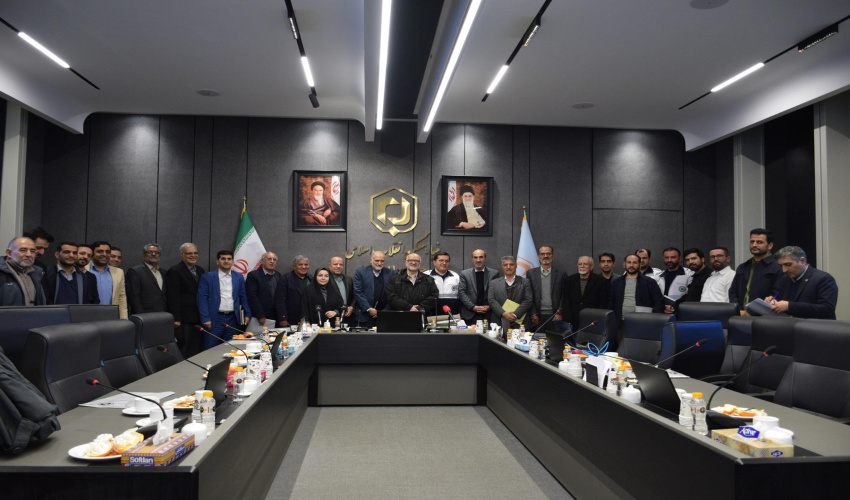
The specialized meeting reviewing the performance of the Crisis Management Research Group, Resource Mobilization, and National Resilience working groups of the SNDU was held, hosted by the Housing Foundation of the Islamic Revolution.
According to the University’s Center for Communications and International Relations, the fourth specialized meeting of the heads and secretaries of the Crisis Management, Resource Mobilization, and National Resilience working groups of The Supreme National Defense University was held on Monday, February 2, 2026, at the conference hall of the Housing Foundation of the Islamic Revolution. The meeting was chaired by Dr. Seyed Mehdi Hashemi and attended by the heads, secretaries, and advisors of the relevant working groups.
According to the performance reports presented at the meeting, the key activities and specialized achievements in the field of crisis management during the first nine months of 2025 (Iranian year 1404) included: conducting advanced training courses; developing educational standards and guidelines; documenting incidents and drawing lessons learned; establishing and activating specialized expert panels to set priorities; promoting fundamental research and studies; planning a national crisis management conference and a pre-conference focused on “Artificial Intelligence Governance”; producing scientific content; and giving particular attention to analyzing and proposing solutions for crises in vulnerable regions such as Sistan and Baluchestan, with a focus on water issues, floods, community participation, and environmental sustainability. These initiatives were outlined by the heads and secretaries of the working groups.
The heads and secretaries also highlighted several key points, including the role of art therapy in addressing mental health issues and depression, the lack of revival of defense-related departments from the Sacred Defense era, the absence of operational guidelines during the 12-day imposed war, the issuance of protocols for conducting short-term training and workshop courses, and efforts to secure approval from the Ministry of Science to establish a PhD program in Crisis Management at the National Defense University. They also emphasized holding resilience and recovery meetings nationwide, paying special attention to managing complex crises, and the need to establish emergency evacuation routes during critical situations.
The meeting also proposed priorities and programs for 2026 for the Crisis Management, Resource Mobilization, and National Resilience working groups. These included expanding general and specialized training, increasing the use of modern technologies, strengthening preventive measures and risk reduction, completing and advancing applied research, institutionalizing knowledge and experience, and deepening public participation.
Dr. Seyed Mehdi Hashemi, head of the Crisis Management, Resource Mobilization, and National Resilience working groups at the Supreme National Defense University , emphasized the necessity of crisis management training for all positions and responsibilities. He added that, just as in the case of hybrid warfare, if a hybrid crisis occurs, it is essential to be fully prepared; therefore, everyone—from village chiefs to government ministers—should receive specialized crisis management training.
The head of the Crisis Management group stated that in the event of crises or emergencies, strengths and weaknesses must be clearly identified and decision-making processes defined. He emphasized the need for planning and assessment regarding the 12-day imposed war as well as recent incidents, so that important lessons can be drawn for the country.
Engineer Hossein Bagheri, Deputy Head of the Crisis Management, Resource Mobilization, and National Resilience working groups, emphasized that all officials are required to complete crisis management training in accordance with the resolution of the Supreme Council of the Cultural Revolution. For example, ministers are also obligated to undergo the relevant management training within three months of receiving parliamentary approval.

Your Comment :