

DESIGNING A COMMUNITY-BASED CRISIS MANAGEMENT MODEL FOR EMERGENCY SITUATIONS
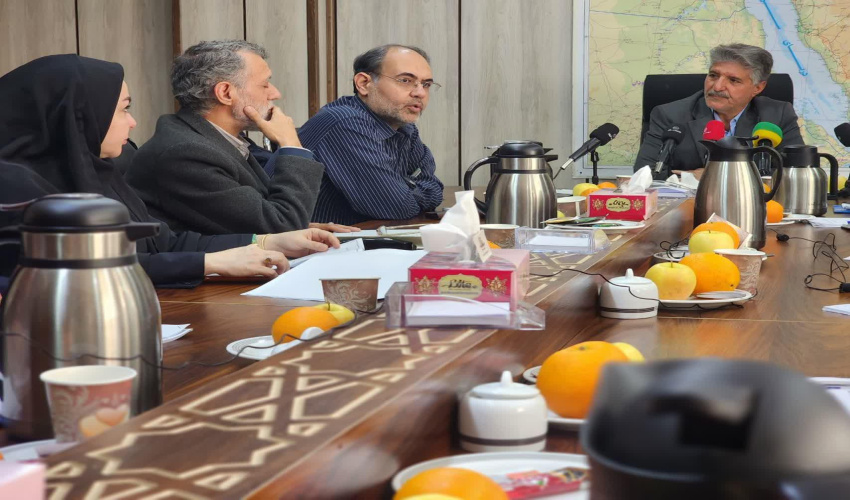
In order to strengthen collaboration between the country’s executive and scientific institutions and enhance national resilience during crises, a specialized session on designing a community-based crisis management model was held with the participation of officials, managers, and experts in urban and crisis management. The session focused on outlining and clarifying mechanisms for community-driven crisis management and leveraging volunteer capacities in emergency situations.
According to the Center for Communications and International Relations of the Supreme National Defense University, a collaborative session of the Municipalities and Dehyaries Organization (a civil and semi-governmental organization in Iran that operates within villages. This organization is managed by a Dehyar, a village administrator and functions similarly to a municipality in urban areas of the country), titled “Designing a Community-Based Crisis Management Model for Emergency Situations in the Counties of Tehran Province,” was held at 10:00 a.m. on Wednesday, February 18, 2025 (29 Bahman 1403), in the Shahid Salari Conference Hall of the university. This session followed multiple meetings between the Crisis Management Group and Tehran Municipality and was organized with the active participation of Dr. AliReza Nosrati, head of the Municipalities and Dehyaries Organization of the country, as the liaison between the group and the municipality, and through the efforts and collaboration of Dr. Seyed Mehdi Hashemi, head of the Crisis Management, Mobilization, and National Resilience Group; Engineer Hossein Bagheri, deputy of the group; and Engineer Mojabi, for the purpose of reviewing and implementing the proposed plan.
At this session, a group of officials and experts in crisis management attended, including Engineer Morteza Akbarpour, Secretary of the Training and Empowerment Task Force; Dr. Farshid Ghasemlou from the Strategic Studies Center of the Municipalities and Dehyaries Organization; Mohammad Toolabi from the Municipal and Village Studies Center; Seyed Javad Fesharaki, Secretary of the Urban Planning Task Force of the Expediency Discernment Council; and Engineer Bijan Yavar, Deputy of Planning at the Social Participation Organization of Tehran Municipality.
The speakers at the session emphasized the necessity of collaboration and synergy between the Supreme National Defense University and the Municipalities and Dehyaries Organization. They highlighted the importance of structuring the role of the public in crisis management, identifying the capacities of the Basij and volunteer forces, making resource distribution data-driven, and coordinating among executive bodies, including municipalities, Dehyaries, the police, the army, and the IRGC. Optimizing the use of the “golden 72 hours” in crisis situations was also a key focus of the session.
In conclusion, the participants recognized the community-based management model as an effective national strategy that, by relying on the people’s faith-driven motivations, can strengthen national resilience and counter the exaggerations of foreign media.

Your Comment :